James Thickett
Contact Reduction
Summary
The contact centre received ~300 daily calls around card declines, forgotten PINs, and lost/stolen cards, generating operational costs (~£100,000/year) and customer frustration. This project explored how the portal, mobile app, and digital channels could proactively deliver actionable information to reduce inbound calls and improve early-life customer experience.
My Role
I led discovery and experience strategy for a contact reduction initiative, working cross-functionally with operations, product, and digital teams to identify high-impact opportunities across mobile and web channels.
My focus was on translating operational data into actionable experience improvements, aligned to cost reduction and customer satisfaction goals.
Customers were calling because the system knew the answer; but the user didn’t.
The Problem
- Users lacked visibility into why a card failed or how to resolve issues, leading to frustration and unnecessary support calls.
- Inactive accounts, frozen cards, and PIN issues were causing avoidable friction.
- Existing digital channels offered limited guidance; no systematic approach existed for communicating actionable information to users.
- Constraints
- Compliance and accuracy requirements for card-related communications.
- Multiple stakeholders (ops, product, UX, agency) with varying priorities and technical limitations.
Constraints
- Compliance and accuracy requirements for card-related communications.
- Multiple stakeholders (ops, product, UX, agency) with varying priorities and technical limitations.
- Technology team roadmap alignment
Process
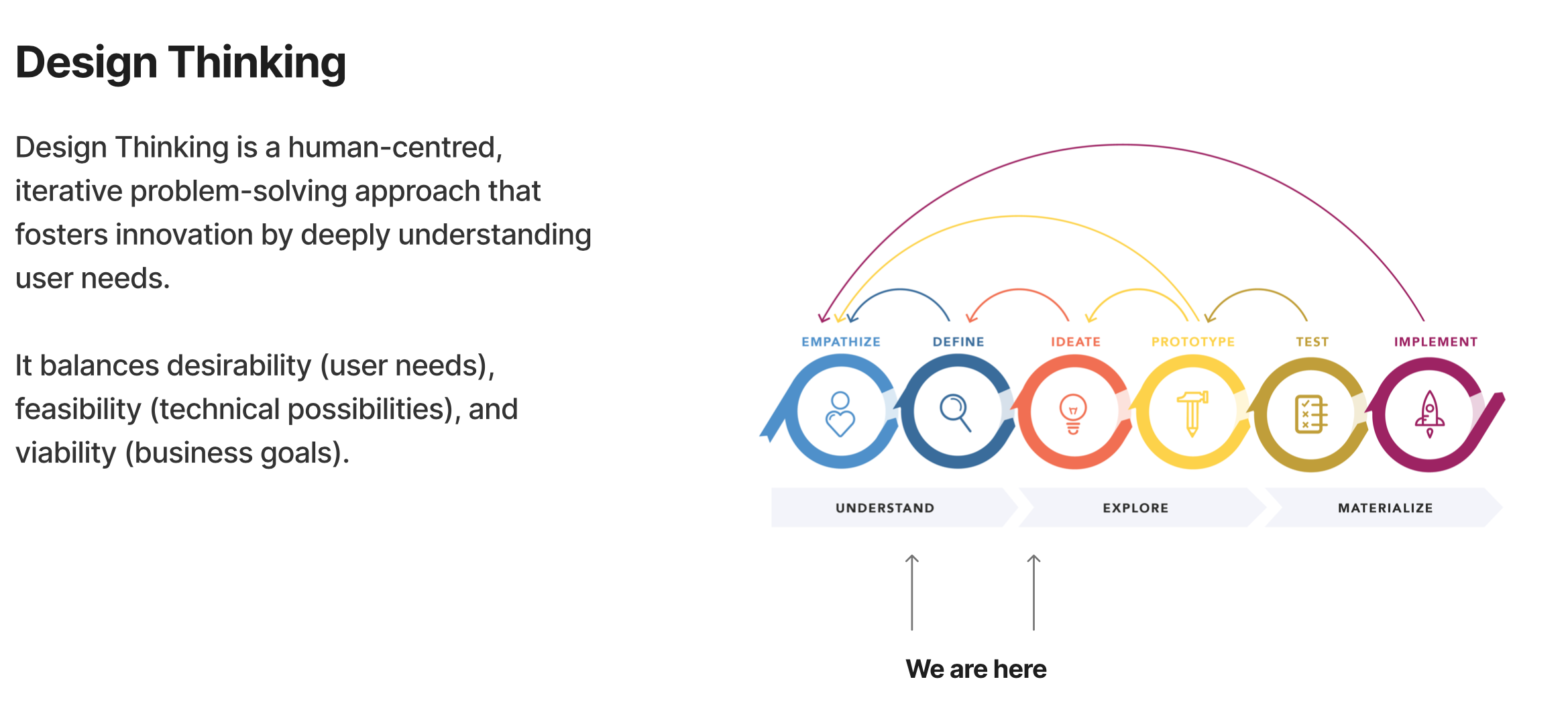
Call centres exist where product stops
Personas:
- Fleet managers: Need oversight of multiple cards, quick insight into failures, and proactive control.
- Drivers: Need rapid resolution of card issues to avoid operational disruption.
- Ops leads wanting to reduce operational costs.
UX Research:
- Analysed call data to identify the main contact reasons (~63% of calls attributed to three key issues: declines, PINs, frozen accounts).
- Mapped friction points across onboarding, portal, and mobile app.
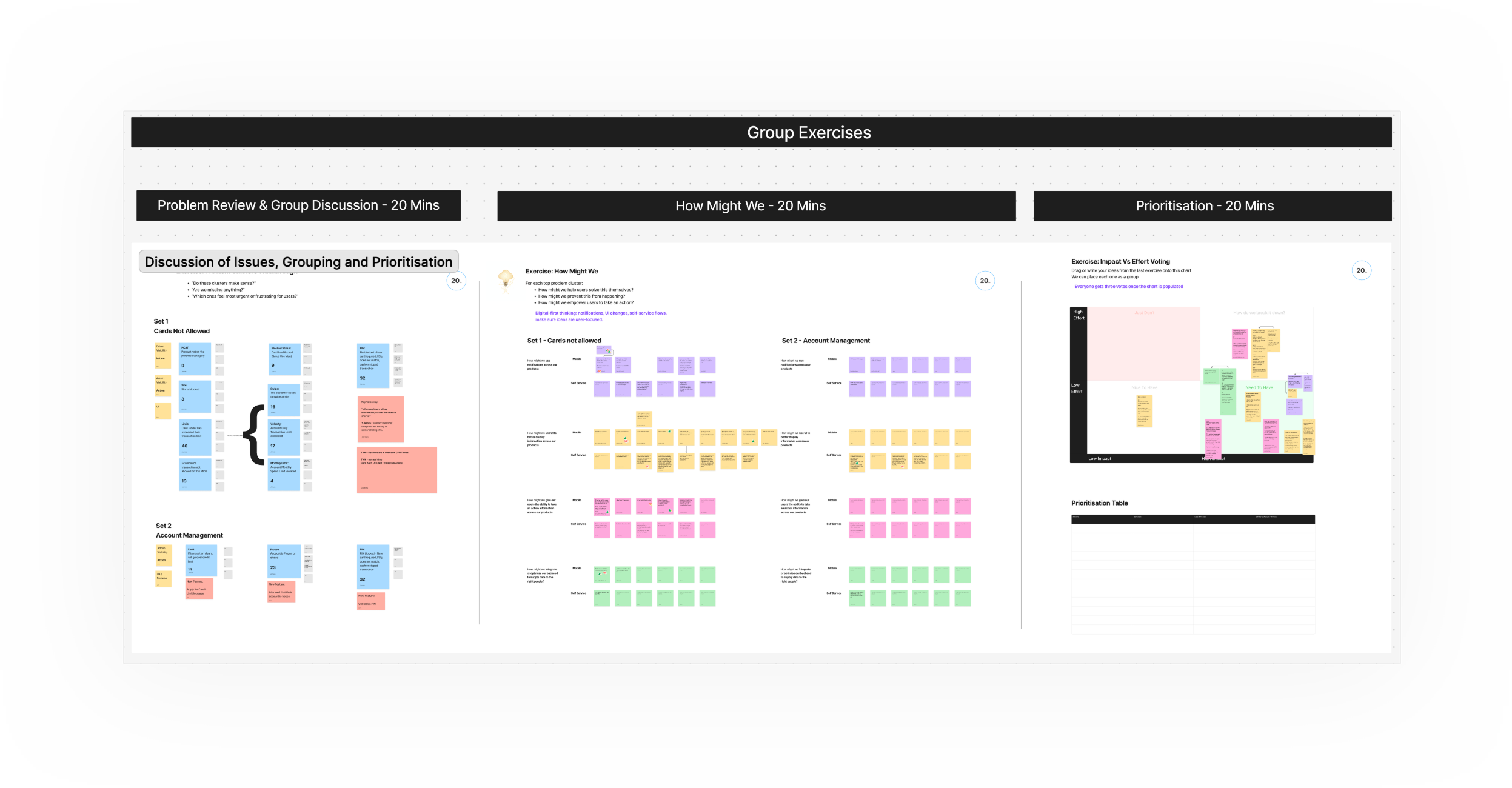
- Conducted workshops with ops, product, and agency teams to surface challenges and brainstorm solutions.
Better information beats better deflection
Iterations & Exploration:
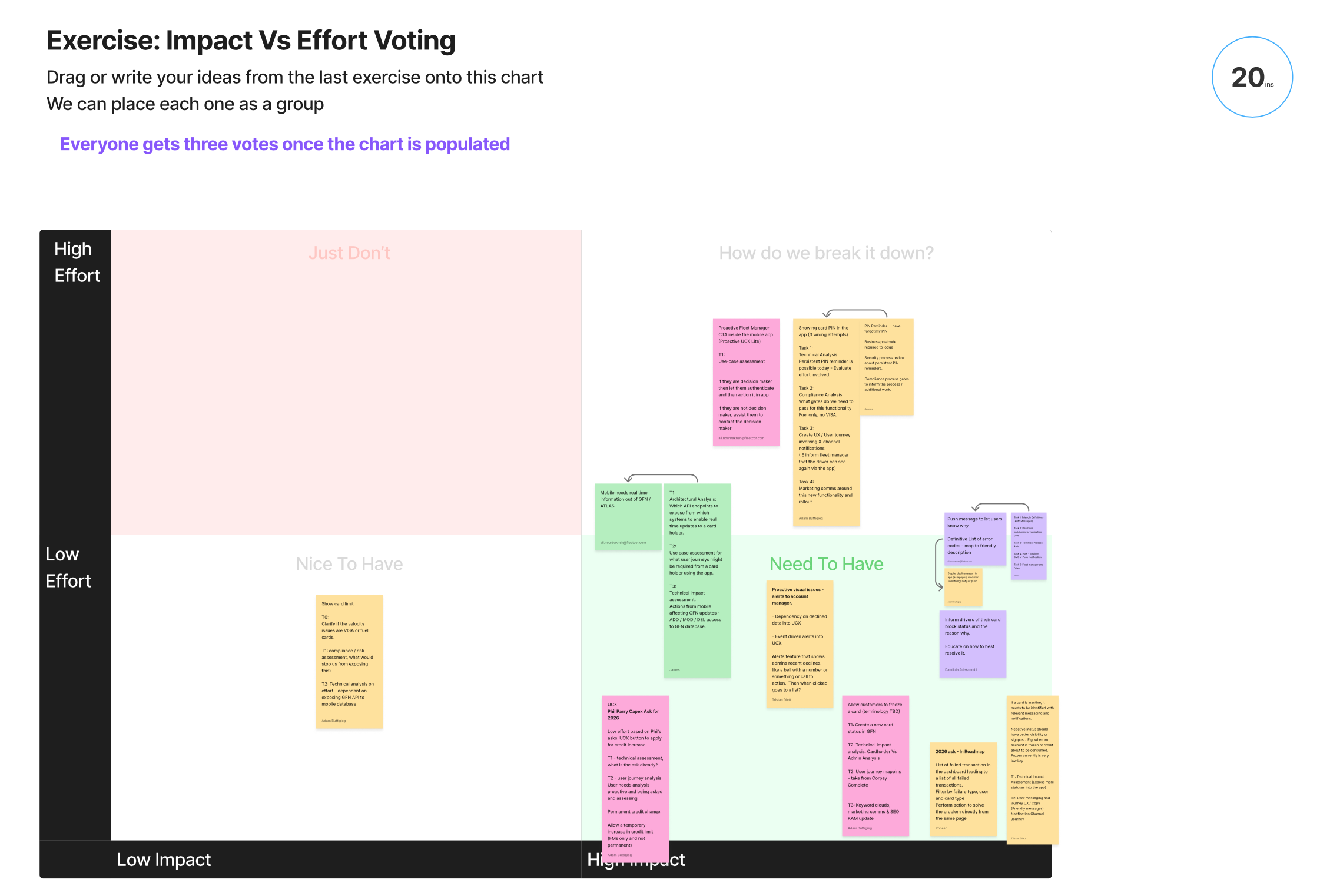
- Prioritised interventions using an impact vs. effort matrix: Quick Wins → Collaborative Features → Tactical Features.
- Designed early concept screens demonstrating:
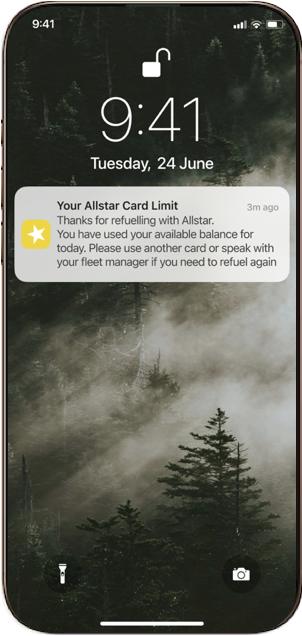
- Decline notifications with actionable guidance for drivers and fleet managers.
- PIN visibility in-app.
- Account freeze/unfreeze workflows.
- Dashboard banners highlighting inactive accounts/cards.
- Developed a phased delivery roadmap (Next → Later), including technical exploration for triggers, API feasibility, and cross-platform integration.
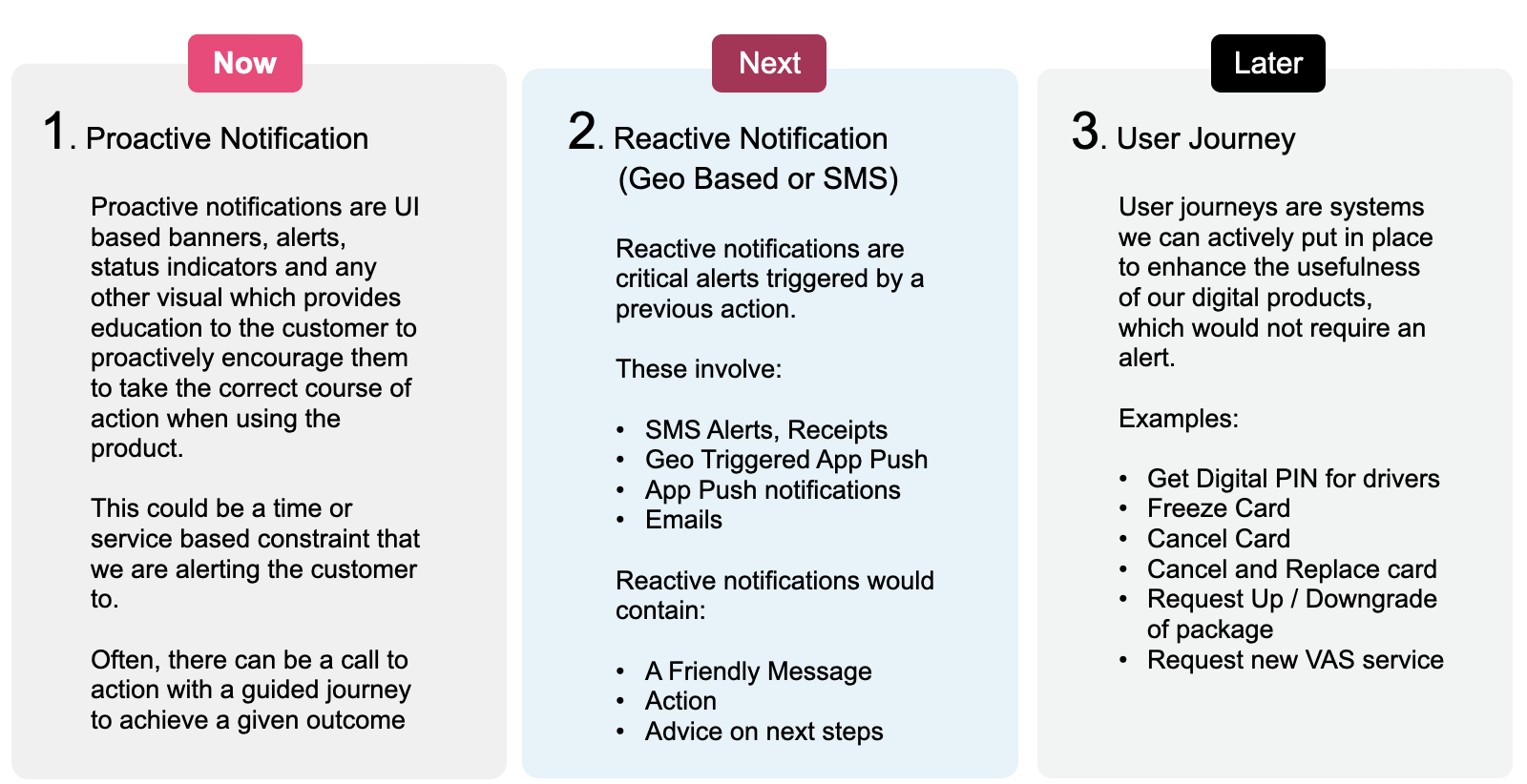
Reactive Response
(ATLAS)
CARD AUTHORISER

SENDS DECLINE DATA
(API INTEGRATION)



DATA LISTEN & FRIENDLY MESSAGE CONFIGURATION

Solution
We designed an end-to-end digital self-service framework to reduce unnecessary contact while improving the customer experience:
- Discovery & Research: Conducted workshops with ops, product, and UX teams to identify the highest-impact problems, categorise call types, and map user journeys.
- Cross-Functional Collaboration: Aligned product, UX, and operations teams, including agency designers, to develop solutions that were actionable, measurable, and technically feasible.
- Phased Delivery Plan: Prioritised initiatives into quick wins, collaborative features, and tactical enhancements based on impact vs effort.
For example:
- Quick Wins: Flagging inactive cards/accounts, simple tables of failed transactions for fleet managers.
- Inform: Show users friendly messages which explain why their card failed and what the next steps are.
- Collaboration: enabling card freeze/unfreeze controls and credit limit requests.
- Tactical Features: Surfacing PINs in app, forcing engagement (boosting MAU) as the only way to access PIN info.
- Readiness for Implementation: Designed screens, flows, and notifications ready to be deployed cross-platform, demonstrating how the solution would work for drivers and fleet managers alike.
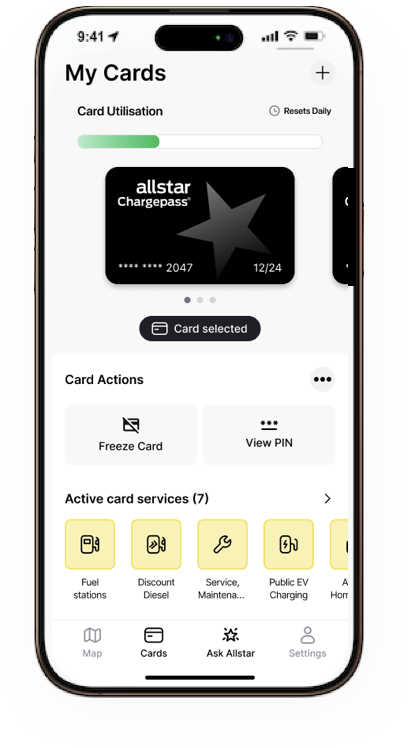
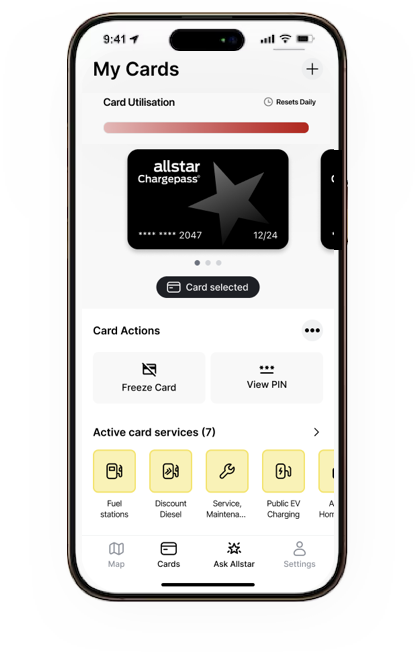
Information & Control: Showing card utilisation in the app would show drivers daily spend limits, so drivers don’t try to use their card when it will not authorise. Giving them key controls like Freeze can and View PIN would give them control, and not need to call in, or call their fleet managers
Impact
The framework addressed three core reasons for inbound calls, accounting for approximately 63% of total daily volume. Ops leadership and the VP of Operations were enthusiastic about the potential cost savings and efficiency gains, and the solution provided a clear roadmap for phased delivery. By connecting digital tools with the customer experience, the work positioned the business to reduce call volumes, boost NPS/CSAT, and improve operational efficiency once implemented.
63%
Reduction in inbound calls, identified from four core solution channels
Learnings
This project illustrates how structured discovery, cross-team collaboration, and thoughtful UX design can uncover high-value opportunities, even before full implementation. Stakeholders championed the work, recognising its potential to deliver measurable impact and enhance the end-to-end customer journey.
Next: Digital Payments >
Contact Reduction
Summary
The contact centre received ~300 daily calls around card declines, forgotten PINs, and lost/stolen cards, generating operational costs (~£100,000/year) and customer frustration. This project explored how the portal, mobile app, and digital channels could proactively deliver actionable information to reduce inbound calls and improve early-life customer experience.
My Role
I led discovery and experience strategy for a contact reduction initiative, working cross-functionally with operations, product, and digital teams to identify high-impact opportunities across mobile and web channels.
My focus was on translating operational data into actionable experience improvements, aligned to cost reduction and customer satisfaction goals.
Customers were calling because the system knew the answer; but the user didn’t.
The Problem
- Users lacked visibility into why a card failed or how to resolve issues, leading to frustration and unnecessary support calls.
- Inactive accounts, frozen cards, and PIN issues were causing avoidable friction.
- Existing digital channels offered limited guidance; no systematic approach existed for communicating actionable information to users.
- Constraints
- Compliance and accuracy requirements for card-related communications.
- Multiple stakeholders (ops, product, UX, agency) with varying priorities and technical limitations.
Constraints
- Compliance and accuracy requirements for card-related communications.
- Multiple stakeholders (ops, product, UX, agency) with varying priorities and technical limitations.
- Technology team roadmap alignment
Process
Call centres exist where product stops
Personas:
- Fleet managers: Need oversight of multiple cards, quick insight into failures, and proactive control.
- Drivers: Need rapid resolution of card issues to avoid operational disruption.
- Ops leads wanting to reduce operational costs.
UX Research:
- Analysed call data to identify the main contact reasons (~63% of calls attributed to three key issues: declines, PINs, frozen accounts).
- Mapped friction points across onboarding, portal, and mobile app.
- Conducted workshops with ops, product, and agency teams to surface challenges and brainstorm solutions.
Better information beats better deflection
Iterations & Exploration:
- Prioritised interventions using an impact vs. effort matrix: Quick Wins → Collaborative Features → Tactical Features.
- Designed early concept screens demonstrating:
- Decline notifications with actionable guidance for drivers and fleet managers.
- PIN visibility in-app.
- Account freeze/unfreeze workflows.
- Dashboard banners highlighting inactive accounts/cards.
- Developed a phased delivery roadmap (Next → Later), including technical exploration for triggers, API feasibility, and cross-platform integration.
Reactive Response
(ATLAS)
CARD AUTHORISER

SENDS DECLINE DATA
(API INTEGRATION)
DATA LISTEN & FRIENDLY MESSAGE CONFIGURATION
Solution
We designed an end-to-end digital self-service framework to reduce unnecessary contact while improving the customer experience:
- Discovery & Research: Conducted workshops with ops, product, and UX teams to identify the highest-impact problems, categorise call types, and map user journeys.
- Cross-Functional Collaboration: Aligned product, UX, and operations teams, including agency designers, to develop solutions that were actionable, measurable, and technically feasible.
- Phased Delivery Plan: Prioritised initiatives into quick wins, collaborative features, and tactical enhancements based on impact vs effort.
For example:
- Quick Wins: Flagging inactive cards/accounts, simple tables of failed transactions for fleet managers.
- Inform: Show users friendly messages which explain why their card failed and what the next steps are.
- Collaboration: enabling card freeze/unfreeze controls and credit limit requests.
- Tactical Features: Surfacing PINs in app, forcing engagement (boosting MAU) as the only way to access PIN info.
- Readiness for Implementation: Designed screens, flows, and notifications ready to be deployed cross-platform, demonstrating how the solution would work for drivers and fleet managers alike.
Information & Control: Showing card utilisation in the app would show drivers daily spend limits, so drivers don’t try to use their card when it will not authorise. Giving them key controls like Freeze can and View PIN would give them control, and not need to call in, or call their fleet managers
Impact
The framework addressed three core reasons for inbound calls, accounting for approximately 63% of total daily volume. Ops leadership and the VP of Operations were enthusiastic about the potential cost savings and efficiency gains, and the solution provided a clear roadmap for phased delivery. By connecting digital tools with the customer experience, the work positioned the business to reduce call volumes, boost NPS/CSAT, and improve operational efficiency once implemented.
63%
Reduction in inbound calls, identified from four core solution channels
Learnings
This project illustrates how structured discovery, cross-team collaboration, and thoughtful UX design can uncover high-value opportunities, even before full implementation. Stakeholders championed the work, recognising its potential to deliver measurable impact and enhance the end-to-end customer journey.
Next: Digital Payments >
